With a heart beating for salmon welfare
Text: Torunn Hansen-Tangen
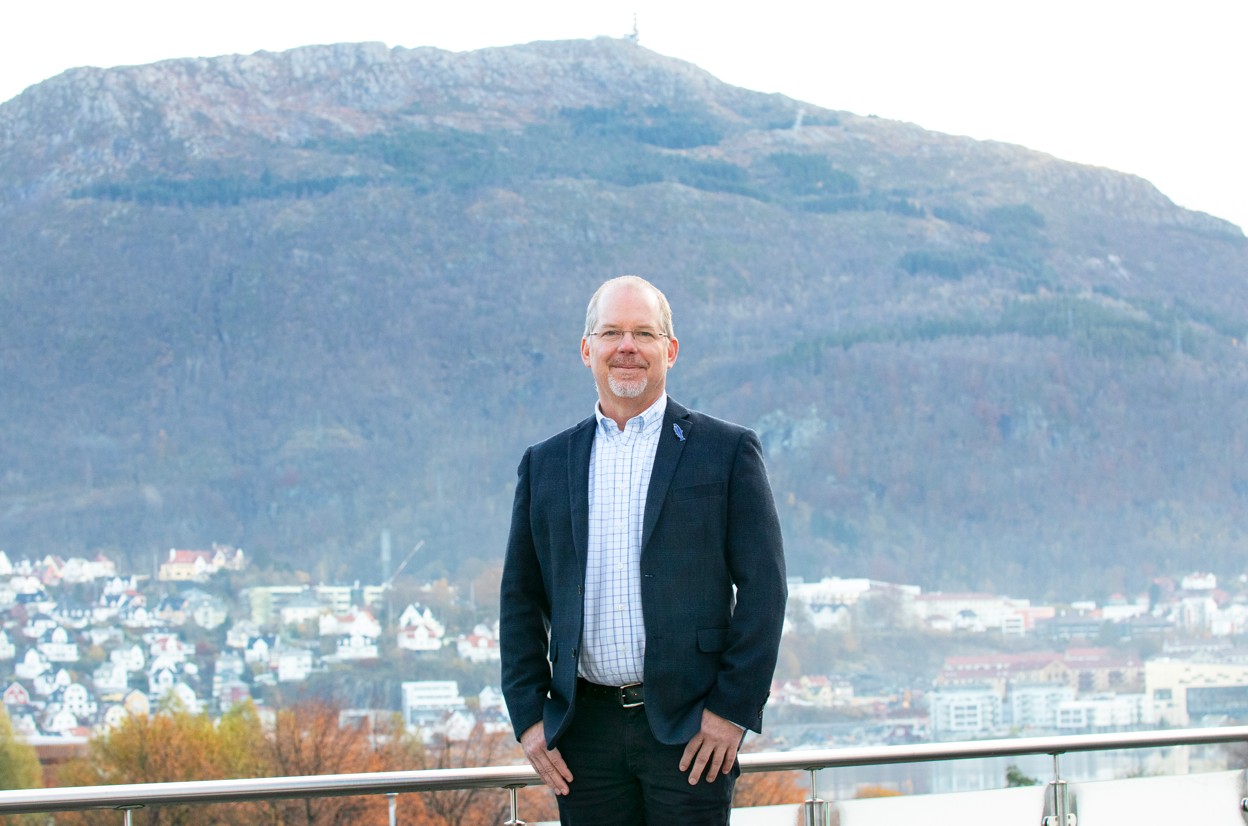
After decades of research into salmon biology and welfare, Lars Ebbesson is stepping into the role of CEO at VenturiTech to help transform sea lice treatment—with technology designed to reduce handling, stress and mortality while advancing a more sustainable aquaculture industry.
After more than three decades spent studying fish biology, animal welfare and sustainable food production, Lars Ebbesson believes he has finally found a way to turn knowledge into lasting change.
As the newly appointed CEO of VenturiTech, he is leaving behind a long and distinguished research career to help transform how the aquaculture industry tackles one of its biggest challenges: sea lice.
"I want to make an impact," he says. "I work towards things that are going to make food for the planet in a good way.”
For Lars, the journey began long before VenturiTech.
His fascination with salmon started during his university years, when he studied chemistry, biochemistry and molecular biology. Through his father, who is also a scientist, he learned that salmon undergo dramatic changes in their brains when they migrate from freshwater to seawater.
Curious to understand why, he set out to investigate the mystery.
That question would shape much of his career.
Over the following 25 years, Lars immersed himself in salmon biology, becoming an expert in how fish respond to their environment. His work expanded into physiology, endocrinology, animal welfare and the effects of stress on fish health.
"Salmon are just like us humans," he explains. "Chronic stress makes their immune system weaker, and just like us, they eventually crash."
His work has taken him across disciplines and around the world. From academia and innovation programs to international collaborations focused on food security and sustainable aquaculture, a common theme has remained throughout his career: finding practical ways to improve how food is produced.
Over time, Lars found himself drawn increasingly toward innovation.
"My career has gone from very basic science and more and more into innovation," he says. "I've always wanted to do things that have a purpose for us."
That desire eventually led him to VenturiTech.
Or perhaps more accurately, VenturiTech found their way to him.
While serving as Chief Scientist and Senior Aquaculture Advisor at NORCE and, more specifically, as Program Director of Aquaculture and Fisheries at the European Digital Innovation Hub, Lars spent six months mentoring the VenturiTech team and reviewing their designs.
What impressed him most was not only the technology itself, but the people behind it.
"The engineers at VenturiTech presented their solutions and I made suggestions," he recalls. "Everything I said, they took to heart and made the system better. Dramatically better. There aren't that many engineers who would do that."
The experience convinced him that the company was developing something truly different.
At the heart of VenturiTech's innovation is a new approach to sea lice treatment, which currently accounts for nine percent [TH1.1]of a farmer’s operational costs.
Today's sea lice methods often involve crowding fish, pumping them onto well boats and treating entire populations through processes that affects the barrier function and physiology that are stressful for the fish and often lead to fish welfare problems and mortalities. VenturiTech's solution aims to eliminate the need for well boats altogether, treating the sea lice on the fish only, directly at the farm, while minimizing handling and stress.
For Lars, however, the significance goes far beyond technology.
"The technology is totally disruptive," he says.
By continuously keeping sea lice levels low across the entire population, he believes the system can dramatically improve fish welfare while also reducing the environmental impact on wild salmon populations.
The benefits could extend even further. Reduced handling of fish, lower mortality rates, less fuel consumption and fewer operational costs all contribute to a more sustainable industry.
But perhaps the greatest opportunity, according to Lars, lies in changing perceptions.
"I believe VenturiTech has the opportunity to change the consumers perception of the fish farming industry to one that cares about animal welfare and the environment," he says.
Throughout his career, Lars has focused on creating solutions that balance food production with environmental responsibility. Whether working on fish welfare, digitalization, food security initiatives or sustainable aquaculture, his motivation has remained remarkably consistent.
"For me to be put in the driver's seat of a company that really can provide solutions that make it better for the fish, the environment and fish farmers, what better place for me than that?" he says.
Asked what he hopes people will say about VenturiTech in ten years' time, his answer is immediate:
"I'm so glad we took VenturiTech's technology into use."